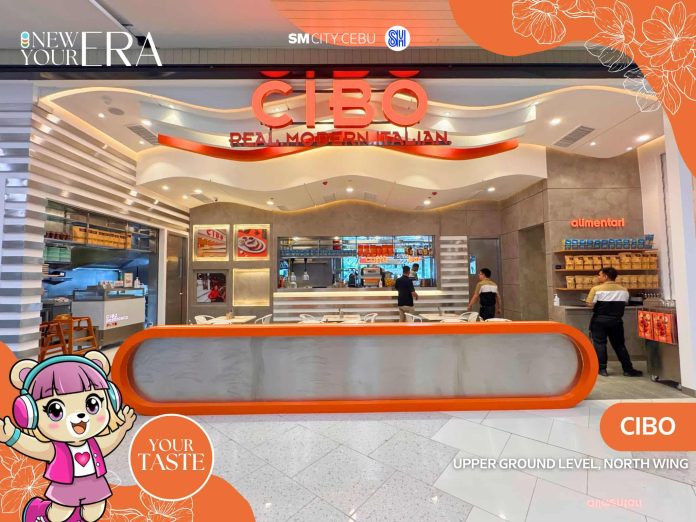
Cebuanos have a new reason to explore the city’s growing dining landscape as CIBO, a well-established Italian restaurant brand, has officially opened its doors at SM City Cebu’s North Wing, Upper Ground Level.
The new branch brings with it the restaurant’s hallmark menu of pizzas, steaks, and pastas, alongside modern interpretations of Italian classics that include Filipino influences.
The concept combines authenticity with accessibility, offering diners a taste of Italy in a contemporary and welcoming setting.
CIBO’s arrival adds to the expanding roster of dining choices at SM City Cebu, one of the country’s largest shopping centers and a focal point for both local and international brands.
The opening reflects a broader trend of national restaurant groups selecting Cebu as a prime growth market, driven by the city’s strong consumer base and reputation as a hub for tourism, retail, and lifestyle ventures.
The restaurant’s menu is designed to cater to a wide range of tastes, from traditional Italian pasta and thin-crust pizza to premium meats and lighter options.
By incorporating local twists into global recipes, CIBO aims to serve both seasoned food enthusiasts and casual diners seeking new culinary experiences.
The expansion into Cebu highlights the brand’s commitment to widening its reach beyond Metro Manila and into key regional centers.
For Cebu, the entry of CIBO further establishes the city’s position as a culinary destination in the Visayas, where local and international flavors converge to meet growing consumer demand.
The opening marks another step in the continued transformation of Cebu’s dining landscape, with established names increasingly recognizing the city’s potential as both a lifestyle hub and a gateway to the Visayas market.
A lawmaker has filed a bill in the House of Representatives seeking to grant monthly compensation to full-time housewives, formally recognizing their unpaid household labor as vital to nation-building.
House Bill No. 3141, or the proposed “Nanay ng Tahanan Act,” introduced by Rep. Nathaniel “Atty. Nat” M. Oducado, would provide ₱1,500 in monthly financial assistance to eligible beneficiaries.
The measure covers housewives whose families fall below the poverty threshold, provided they are not engaged in part-time or home-based paid work. Beneficiaries must also be caring for at least one child aged 12 or younger, or a dependent child with mental incapacity.
The program would be administered by the Department of Social Welfare and Development (DSWD) in coordination with local government units, using the National Household Targeting System for Poverty Reduction (NHTS-PR) to identify qualified households.
To ensure accountability, the bill sets conditions for assistance: children must be enrolled in public schools with at least 85% attendance, demonstrate responsible behavior, and families must attend quarterly barangay assemblies on responsible citizenship.
Financial support will be reviewed every three years by Congress, in consultation with the DSWD, to reflect inflation and wage adjustments. Funding would come from both the national budget and LGU appropriations.
If enacted, the measure would mark the first time the Philippine government formally compensates full-time housewives, reframing domestic work long regarded as unpaid labor into a recognized contribution to the economy.
Photo courtesy of the Local Government of Borongan.
Philippine Airlines said it will operate special flights between Cebu and Borongan, Eastern Samar, on September 4 and 9 to accommodate travelers attending the annual Padul-ong Festival.
The additional services respond to a request from the Borongan local government and will supplement PAL’s regular thrice-weekly flights on the route, the airline said.
Flight PR2651 will depart Cebu at 11:10 a.m. and arrive in Borongan at 12:05 p.m., while the return flight PR2652 will leave Borongan at 12:30 p.m. and land in Cebu at 1:20 p.m.
Rabbi Vincent Ang, president of PAL Express, said the airline was pleased to partner with the Borongan local government to address increased travel demand for the festivities.
The flights also provide connections for travelers to and from Manila.
The Padul-ong Festival is held annually in honor of Nuestra Señora dela Natividad, Borongan’s patroness since the Spanish colonial period.
PAL said festival attendees can also use the opportunity to visit Eastern Samar’s tourist destinations, including beaches, rock formations and historical sites.
Popular attractions in the province include Binogawan Beach, Canhugas Nature Park with its rock formations, surfing destination Calicoan Island, and Gindu Yanan Cove featuring natural arch formations.
The Balangiga Bells also draw visitors to the region.
Eastern Samar has been developing its tourism sector, with surfing emerging as a growing attraction alongside its natural and historical sites.
Six student teams have qualified for the finals of Davao Hackestate: Hackathon 2025, a technology innovation contest focused on developing solutions for the Philippines’ real estate sector, organizers said.
The final round will take place on Tuesday at the Grand Regal Hotel in Davao City, with teams competing for cash prizes totaling 66,000 pesos.
The finalists include The Huntrix from Mapúa Malayan Colleges Mindanao, No Idea? from STI Gensan, Realtech and UM Trojans from the University of Mindanao, Neurobytes from AMA Computer College, and SJPCians from St. John Paul II College of Davao.
Winners will receive 30,000 pesos for first place, 20,000 pesos for second, and 10,000 pesos for third, with a consolation prize of 3,000 pesos. The top three teams will also be offered mentorship and incubation support to commercialize their projects.
“We will help them realize their projects and even connect them with potential funders,” said Anthony Gerard Leuterio, founder of PropTech Philippines, which organized the event alongside Filipino Homes.
Leuterio, a computer science graduate, said the hackathon is part of the company’s mission to support Filipino innovation while addressing real-world challenges in the property sector.
“This is a sustainable activity—we want to help the country find the best software ideas and expose them globally,” he said.
The judging panel comprises software developers and real estate practitioners to evaluate both technical execution and industry relevance, organizers said.
PropTech Philippines plans to expand future hackathons beyond real estate to tackle broader challenges facing the Philippines, Leuterio added.
The initiative highlights the growing potential of property technology to transform the real estate industry while empowering Filipino students to develop solutions with global applications.
Taiheiyo Cement Philippines Inc (TCPI) broke ground on a new administration office building at its plant complex in San Fernando, Cebu, marking the latest expansion for the Japanese cement manufacturer’s Philippine operations.
The company held a safety blessing ceremony for the facility, which will be located near the main gate of the plant complex and is scheduled for completion by March 2026, TCPI said.
The new building will centralize all departments under one roof and include a conference space for more than 400 people, which the company plans to use for community engagements including scholarship ceremonies and health worker seminars, according to TCPI President and CEO Takashi Miyashita.
“Our new Admin Building is designed to make our work activity more productive and efficient,” Miyashita said at the ceremony. The project follows the completion of TCPI’s Kiln Renewal Project in 2024.
San Fernando Mayor Mytha Ann Canoy praised the investment as evidence of the company’s commitment to the local community.
“Taiheiyo does not simply build structures. It builds trust, opportunity, and community,” Canoy said. “May this Admin Office rise not just as a center of operations, but as a home for innovation, leadership, and collaboration.”
The construction project is being carried out by CCT Constructors Corporation (CCTCC), a subsidiary of Japan’s Toyo Construction, which has operated in Japan for 98 years and in the Philippines for 49 years.
CCTCC President Kaname Futaki said the project combines “the best of both worlds” with Filipino skills and Japanese quality standards.
Takuya Nose, TCPI’s senior vice president for human resources and administration, emphasized the company’s safety-first approach to the construction project.
“The new building will not only evolve as a workplace but as a space where we foster collaboration to pursue our goals,” Nose said.
Materials for the project are being supplied by Solid Earth Development Corp, according to the company.
Taiheiyo Cement Philippines is the local unit of Japan’s Taiheiyo Cement Corporation, one of the country’s largest cement manufacturers.
The Talisay Chamber of Commerce and Industry (TCCI) unveiled two new initiatives aimed at attracting investment and strengthening collaboration with local government, as the city positions itself as a business hub in Cebu.
At the induction of new officers, TCCI president Macario “Carl” Cabusas II said his leadership will prioritise “listening first, acting with integrity, and turning practical programs into measurable results for MSMEs.”
The first initiative, “Talisay Business Month,” will be held every weekend in October as the city’s first month-long enterprise celebration.
It will feature trade fairs, business forums, exhibits, and networking events to highlight local industries and promote entrepreneurship.
The second programme, “Project Alpha: Talisay Towards the Future,” will establish a think tank of economists, urban planners, environmentalists, IT experts, educators and entrepreneurs.
The group will assess the city’s strengths and challenges and make data-driven recommendations to help market Talisay as a future-ready investment destination.
Mayor Sam Sam Gullas welcomed the initiatives, saying they align with the city’s growth strategy.
Philippine Chamber of Commerce and Industry (PCCI) Cebu vice president for the Visayas Melanie Ng also attended the ceremony, alongside local officials and the newly inducted TCCI leadership team.
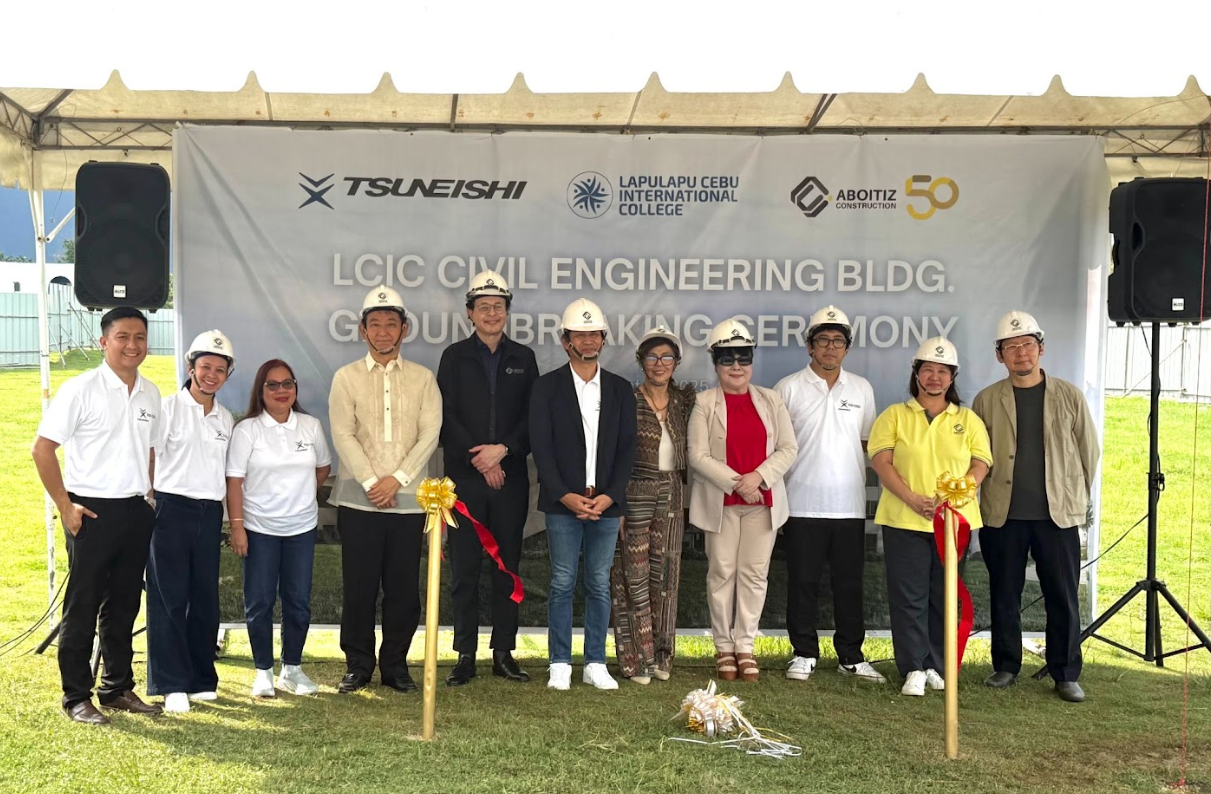
Aboitiz Construction and Tsuneishi Holdings (Cebu) Inc., in partnership with Lapu-Lapu Cebu International College (LCIC), broke ground for a new civil engineering building in Bankal, Lapu-Lapu City, aimed at strengthening educational and training facilities for engineering students.
The project, scheduled for completion in 16 months, will provide modern classrooms and laboratories designed to prepare students for careers in civil engineering and shipbuilding.
Nearly 200 jobs will be generated during construction, with 90% of manpower to be hired locally, the companies said.
“This project is more than just a building. Together with Lapu-Lapu Cebu International College and Tsuneishi Holdings (Cebu) Inc., we are combining expertise, resources, and shared values to build the Civil Engineering Building, a symbol of quality and innovation,” said Ramez Sidhom, chief operating officer of Aboitiz Construction.
Aboitiz Construction, in partnership with Tsuneishi Holdings (Cebu) Inc. and Lapu-Lapu Cebu International College, has broken ground for a 16-month Civil Engineering Building project in Bankal, Lapu-Lapu City that will strengthen educational infrastructure, generate local jobs, and train future engineers for careers in civil engineering and shipbuilding.
LCIC President Grace Gorospe-Jamon said the facility will help advance the school’s academic mission, while Tsuneishi Cebu President Yasuaki Seto said it would play a vital role in training future engineers for the shipbuilding and construction industries.
The initiative builds on a long-standing partnership between Aboitiz Construction and Tsuneishi, which began in 1996 through shipbuilder Tsuneishi Heavy Industries Cebu Inc. (THICI) in Balamban, Cebu.
Aboitiz Construction said it has since supported multiple shipbuilding projects, generating an average of 1,500 jobs annually, mostly sourced from local communities.
(From left to right) Prof. Jay Nathan Jore, Fair Curator; Allen Arvin Tan, Fair Director; Mariz Rallos, Fair Coordinator; and Alyssa Selanova, Curatorial Senior Supervisor of The Kabilin Center.
Tubô Cebu Art Fair, the region’s leading platform for artists, collectors, curators and the public, will return for its 2025 edition from Aug. 29 to 31 at Ayala Center Cebu, with a focus on the histories and cultural roots of Cebuano art.
The three-day fair, free to the public during regular mall hours, will carry the theme “Provenance,” highlighting the stories, origins and contexts that shape the region’s artistic practices. “In the art world, provenance refers to an artwork’s biography, including its journey and meaning,” curator Jay Nathan Jore said.
Founded in 2018 with just 30 participating artists, Tubô has since grown into a major cultural event showcasing grassroots and emerging creatives from Central and Southern Philippines. The fair’s artist-centric model bypasses traditional gallery representation and enables direct engagement between artists and audiences.
“What sets Tubô apart is its ability to empower artists to connect directly with the public, leading to greater appreciation and mutual exchange,” Jore said.
The fair offers affordable price points to help artists raise funds for future projects while providing accessible entry points for collectors and patrons. Activities will include art performances, live demonstrations, interactive installations, music and panel discussions.
This year’s edition will also feature the works of Martino Abellana, regarded as the dean of Cebuano painters, alongside younger collaborators such as Khriss Bajade, John “Nark” Villoria, Jonathan Abellana and Gabi Nazareno. A special highlight will be the Aug. 29 launch of Josua Cabrera’s graphic novel “…Si Jimsky Ug Ang Tanghaga Sa Balay Sa Agta”, followed by an artist talk.
Supported by the Ramon Aboitiz Foundation, Cebu Arts Council and PRWorks Inc., Tubô 2025 also counts Agimat, MyTV and Keeta among its media partners.
The Abellana National School Alumni Federation Incorporated (ANSAFI) is calling on all proud alumni to saddle up for an unforgettable homecoming as it hosts its Grand Reunion 2025 on October 26, 2025, at the USJ-R Coliseum, Basak Campus.
This year’s theme promises a rootin’-tootin’ good time with a Cowboy and Cowgirl Attire dress code, setting the stage for a day of nostalgia, laughter, and renewed friendships.
From 8:00 AM to 5:00 PM, the coliseum will come alive with fun-filled games, exciting raffles, and surprise activities that guarantee to make this gathering a truly memorable one.
“Every reunion is a chance to relive the spirit of ANS – the camaraderie, the lessons, and the joy that shaped who we are today. We invite all alumni, from every batch, to be part of this celebration of heritage and unity,” said ANSAFI President Roy Melgo.
Alumni are encouraged to coordinate with their respective batch presidents for participation. A registration fee of just P150 ensures entry to a day packed with entertainment, bonding, and a chance to reconnect with long-lost classmates and mentors.
With a rich history of molding leaders, dreamers, and achievers, ANS remains a beacon of pride. This grand reunion will not only celebrate cherished memories but also strengthen the bonds that keep the Abellana spirit alive across generations.
Mark your calendars, shine those boots, and get ready to ride into a day of joy and connection, ANS style!
For inquiries and coordination, alumni are encouraged to reach out to their batch presidents or contact ANSAFI President Roy Melgo (09778564729) / Secretary Abbie Berezo (09393288240).
Prominent VisMin property developer Cebu Landmasters Inc (CLI) reported a 13% increase in first-half net income to 2.49 billion pesos ($44.6 million), driven by strong sales momentum and faster project completions across the Visayas and Mindanao regions.
The Cebu-based company, which focuses on developing affordable housing in the Philippines’ secondary cities, said consolidated revenues rose 5% to 11.87 billion pesos in the six months ended June 30.
Real estate sales remained the primary revenue driver, while the company’s diversification efforts showed strong gains with hotel operations income surging 132% and leasing revenues advancing 53%.
“Our strong performance in the first half of the year reflects the disciplined execution of our growth strategy,” Chairman and Chief Executive Jose Soberano III said in a statement.
The company’s reservation and estate sales reached 14.3 billion pesos, up 3% from a year earlier, with flagship projects achieving high sell-out rates.
One Manresa Place, launched earlier this year, sold over 90% of its units and generated more than 5 billion pesos in sales within two weeks of launch.
CLI’s total assets stood at 125 billion pesos by June, supported by ongoing project development and strategic land acquisitions.
The company operates 127 developments, including 105 property-for-sale projects and income-generating assets comprising 10 hotels and six offices.
Looking ahead, CLI plans to launch 12 new projects worth 29 billion pesos in the second half, targeting key markets including Cebu, Davao, General Santos, Ormoc, and Palawan.
The company also signaled expansion beyond its traditional Visayas-Mindanao stronghold, with Chief Operating Officer Jose Franco Soberano saying CLI is “actively scaling up our Luzon operations in preparation for our first project launch in the region by 2026.”
CLI shares have gained approximately 8% year-to-date on the Philippine Stock Exchange.
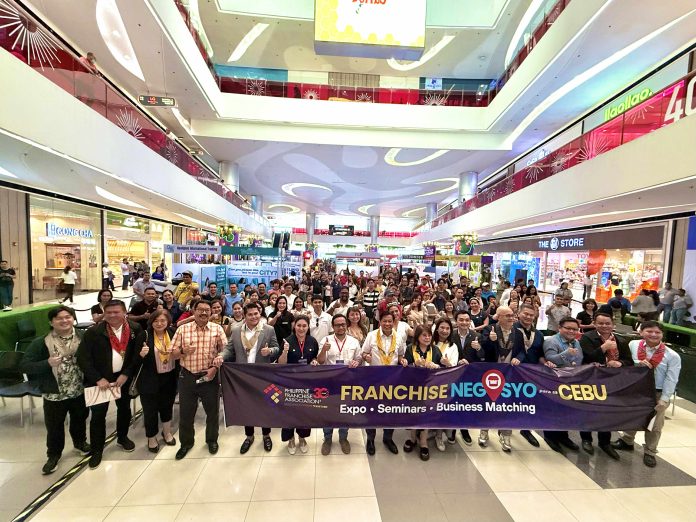
The Philippine Franchise Association (PFA) on Friday kicked off its largest regional franchise expo, “Franchise Negosyo Para sa Region VII (Cebu),” at SM Seaside City Cebu, targeting aspiring entrepreneurs and established business owners across the Visayas.
Held at the Mountain Wing Atrium from August 1 to 2, the two-day event features over 60 exhibitors and more than 200 brands, ranging from food and retail to service-oriented franchise opportunities.
Organized as part of the PFA’s regional expansion strategy, the expo serves as a one-stop platform for learning, networking, and exploring investment-ready franchise models.
“Cebu’s sustained economic growth and its position as a gateway to the Visayas make it an ideal location for franchise expansion,” said Kenneth Lim, PFA Director for Central Visayas.
Participants can attend free seminars, including “How to Invest in the Right Franchise” for first-time investors, and a forum on “Expanding Your Business Through Franchising” featuring top PFA member franchisors.
A separate paid seminar on “How to Franchise Your Business” will be held on August 2 at the Summit Galleria Hotel for businesses ready to scale via franchising.
PFA will also conduct a closed-door “Kamustahan” networking event on Saturday for its Cebu-based members and national officers to discuss regional growth strategies and ongoing support programs.
Admission to the expo is free. Organizers expect strong turnout from both local and regional entrepreneurs, as interest in franchising continues to rise amid a post-pandemic shift toward resilient business models.
Cris Dellera takes his oath as President of Rotary Metro Mandaue, with his wife Dianna standing by his side.
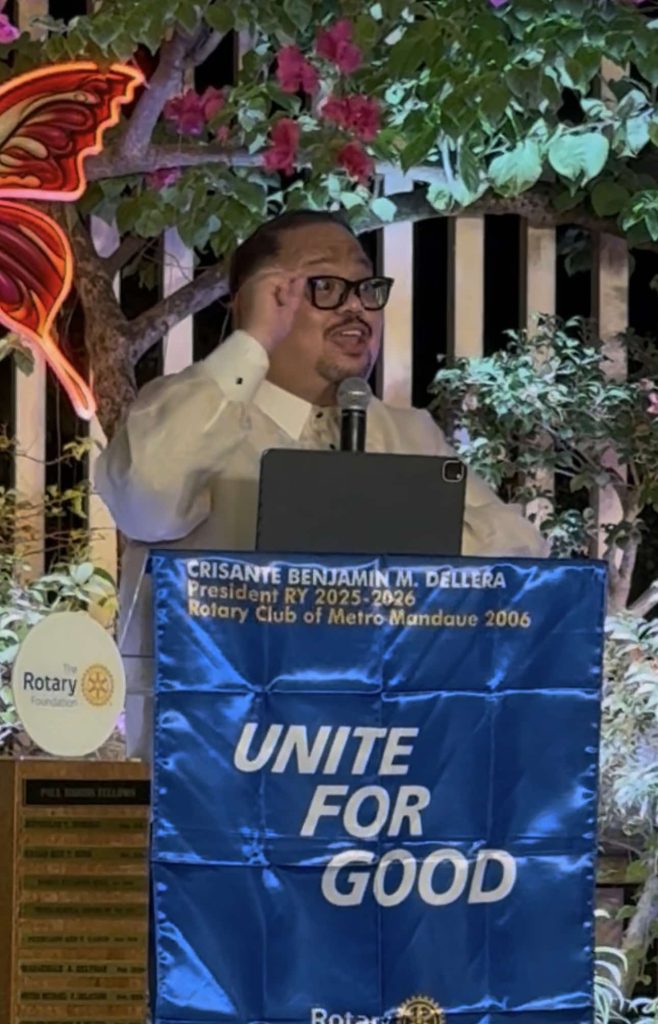
In a ceremony marked by sincerity, symbolism, and a call to deeper service, the Rotary Club of Metro Mandaue inducted its new set of officers for Rotary Year 2025. Leading the club into the new term is entrepreneur and restaurateur Cris Dellera, who takes the helm as Club President.
In his acceptance speech, Dellera echoed this year’s Rotary International theme “Unite for Good” not with fanfare, but with a firm, grounded pledge.
“I don’t stand before you with promises of perfection,” Dellera shared. “But I stand with a pledge: To listen with humility. To lead with transparency. To serve with heart… and to walk beside each of you, not ahead, not above, but with you.”
Calling for a Rotary that’s “united, energized, and relevant,” Dellera emphasized that the club’s impact must go beyond good intentions.
“Let this be the year we turn theme into truth. Let this be the year we Unite for Good,” he declared.
Gracing the induction as keynote speaker was veteran journalist and public relations expert Juniño Padilla, who delivered a reflection on truth, service, and the role of Rotary in a culture often shaped by virality over values.
Veteran broadcast journalist Niño Padilla challenges Rotary to “Unite for Good” — even in the era of Marites. “Let Rotary be the last group that still reads before it reacts… still believes in truth — even if it’s not trending.”
“How do we talk about ‘good’ in a country where chismis spreads faster than truth?” Padilla asked. “Where virtue is doubted, and viral wins over valuable?”
He challenged the club to be a countercurrent in an increasingly reactive world.
“Let Rotary be different,” he urged. “Let it be the last group that still reads before it reacts. Still serves without selfie. Still listens before it judges. And still believes in truth, even if it’s not trending.”
The evening brought together Rotarians, partners-in-service, and community leaders in a reaffirmation of Rotary’s enduring values, service above self, truth above trend, and unity above ego.
As Rotary Metro Mandaue ushers in a new Rotary year, the message is clear: Doing good is not enough, it must be united, deliberate, and real.
Elena, 52, had to wake up as early as 5 am to travel to a nearby barangay so she could buy potable water for her family. Her husband, a fisherman, had to set sail earlier to make sure the family had something to eat for the day.
Life was not easy for Elena and the other residents of Barangay Pang-pang in Ubay, Bohol, a coastal village, where fishing is the main source of income and life remains simple.
For families here, food and water are the essentials, but water has always been a scarce resource.
Residents relied on a deep well, which they said was unfit for drinking or even cooking, for years. The problem worsened after Typhoon Odette, when residents said the water from the shallow well was no longer dependable even for other uses.
Many were forced to travel to neighboring barangays to buy water at ₱25 per gallon, a cost that ate into their already modest income.
“It was too much of a burden, especially for us whose income is barely enough for daily sustenance,” said Elena, not her real name.
But after years of scarcity and dependence on nearby barangays for clean and safe water, residents of Barangay Pang-pang are finally enjoying access to potable water within their own community.
Photo: Sibat Inc
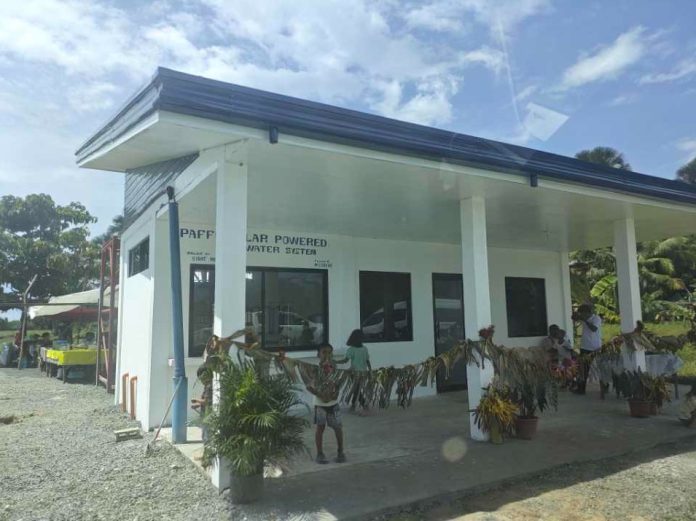
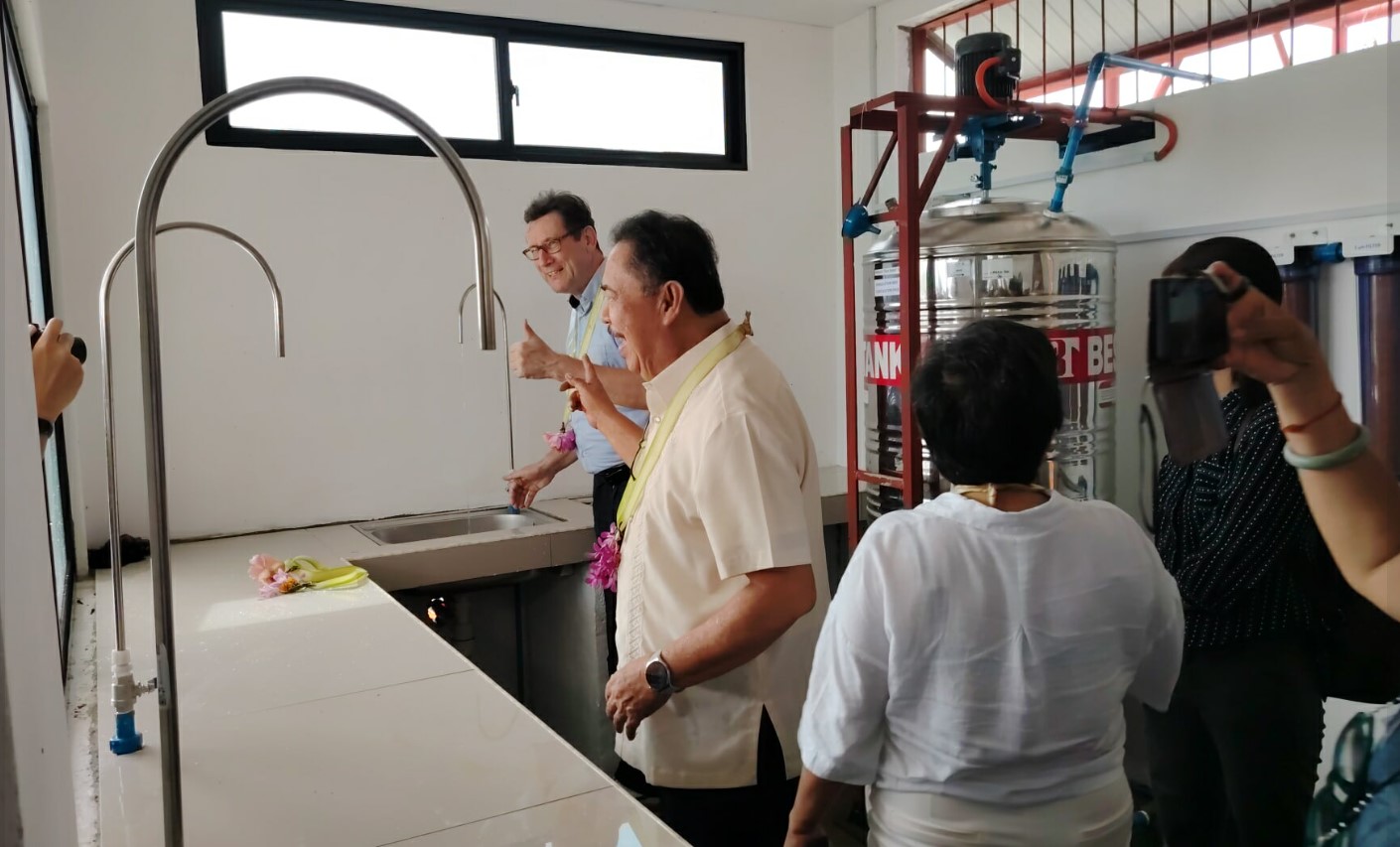
The change came in June 2025 with the turnover of a solar-powered water system with UV filtration implemented by Sibol ng Agham at Teknolohia (SIBAT) and funded by Misereor, a Catholic relief agency based in Germany.
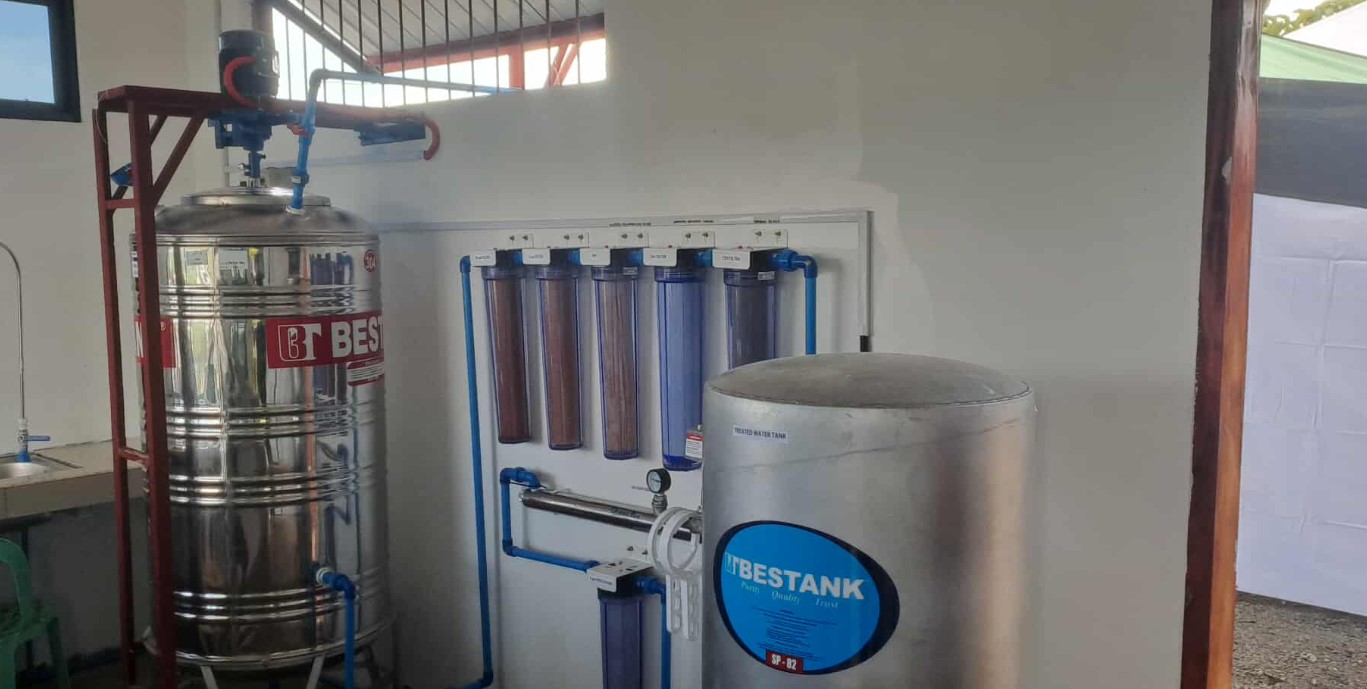
The solar-powered facility, with a capacity of 200 gallons per day, draws groundwater, purifies it through filtration, and delivers it to households at minimal cost.
The system removes odor and impurities while being powered entirely by renewable energy.
Sibat Inc said the transformative benefits of the project include access to safe, clean drinking water for about 100 households; reliable, clean water supply powered by solar energy and sanitized by UV filtration system; economic savings for families no longer purchasing commercial water; and eco-friendly solution reducing use of fossil fuel by adopting renewable energy solutions
Photo: Sibat Inc
For residents like Jucedes Torcende, the project brings relief especially after the devastation of Typhoon Odette worsened the community’s water problems.
“We used to worry where to get clean water. Now, we have it here,” he told reporters during the turnover ceremony.
Officials hailed the initiative as a model of collaboration among local government units, NGOs, and international partners.
“This is a positive example of how our government and people can work together for the benefit of communities on the ground,” said Mathias Kruse, Deputy Head of Mission at the Embassy of the Federal Republic of Germany in Manila.
Arthur Evangelista, executive assistant from the Bohol governor’s office, said the project is aligned with the province’s priority to deliver sustainable water systems to underserved barangays.
Photo: Sibat Inc
Pang-pang is the first recipient, with similar projects planned for Mabini and Carmen.
President Ferdinand Marcos Jr. has emphasized that water is as important as food, underscoring the need for efficient management of water resources.
The initiative also supports the United Nations’ Sustainable Development Goals, particularly those related to clean water, sanitation, and affordable clean energy.
For Elena, the change is felt every day.
“We don’t have to wake up early to buy water anymore,” she said. “Now, we can get clean and safe water right here in our barangay.”
In Barangay Pang-pang, where life is simple and fishing sustains most families, the arrival of solar-powered clean water is more than infrastructure; it is dignity restored, hope renewed, and proof that technology can change lives at the most local level.
Anthony Gerard O. Leuterio, founder of Filipino Homes
Filipino Homes founder Anthony Leuterio is calling on the Department of Tourism (DOT) to expand its global promotional efforts to position the Philippines not only as a tourist destination but also as a long-term investment and residency hub.
“The country offers world-class attractions, but we’re not telling that story loudly or consistently enough on the international stage,” Leuterio said. “We must shift from attracting just transient visitors to cultivating global investors and long-stay residents.”
Leuterio, who is based in Cebu, emphasized the critical role of the real estate sector in this strategy, noting how private developers have turned local communities into vibrant and livable areas.
“Real estate companies are building more than infrastructure—they are also showcasing the Philippines as a premier place to live, invest, and visit,” he said.
He pointed out that despite the country’s rich natural and cultural assets, it continues to lag behind regional peers in tourist arrivals, partly due to weak marketing and a lack of coordinated messaging.
“Competing destinations like Thailand, Vietnam, and Indonesia have long invested in cohesive, well-funded campaigns that highlight their global appeal. The Philippines must do the same, with a fresh approach that integrates tourism with investment promotion,” he added.
In a Facebook post, Leuterio urged the DOT to work more closely with the private sector—particularly real estate and hospitality groups—to present a unified narrative of the Philippines globally.
“Tourism is the lifeblood of our economy. But without strong coordination between the government and key industries, we risk falling short of our full potential,” he said.
He also recommended stronger international campaigns, incentives for tourism-linked businesses, and the development of integrated tourism corridors that combine infrastructure, real estate, and leisure offerings.
“This is a national project. With the right policies and united effort, the Philippines can become not just a dream destination, but a thriving hub for global tourism, investment, and inclusive growth,” Leuterio said.
The Sultanate of Oman plans to open a consulate in Cebu and expand direct air connectivity with the Philippines as part of a broader effort to deepen economic and diplomatic ties, Omani Foreign Minister Sayyid Badr Albusaidi announced during the Cebu-Oman Investment Forum.
The move is accompanied by a new visa-free entry policy for Filipinos, allowing stays in Oman of up to 14 days. Albusaidi said the initiatives are part of a long-term strategy to build new partnerships with Southeast Asia, anchored on business, tourism, and cultural cooperation.
“This is an invitation to think big, explore, and invest in each other’s future,” Albusaidi said during the forum held at the Fili Hotel in Nustar Cebu.
The initiatives include the establishment of a Cebu-based Omani consulate, new direct flight routes between the two countries, the launch of a Golden Visa program targeting long-term investors, and plans to host the Oman-Cebu Investment Forum in Muscat in 2026.
The Cebu-Oman forum was jointly organized with the support of Oman’s Foreign Ministry and Chamber of Commerce.
It brought together Philippine lawmakers and Cebu-based business leaders alongside Omani officials from the tourism, logistics, energy, and technology sectors.
The forum is part of Oman’s Vision 2040 strategy, which promotes innovation, sustainability, and international collaboration.
“Oman is investing in real estate, hospitality, renewable energy, AI, and logistics,” said Mikaela Pacubas Yap, who led the forum organization. “Filipinos are in a prime position to be part of this global shift.”
Yap added that Oman is now more accessible to Filipinos, whether as travelers, entrepreneurs, or investors.
Cebu Chamber of Commerce and Industry president Jay Yuvallos cited Cebu’s strong business ecosystem and skilled workforce as key factors in attracting international partnerships.
Former CCCI president Melanie Ng also highlighted Cebu’s globally minded entrepreneurial community.
During breakout sessions, Cebu’s private sector leaders in IT-BPM, real estate, manufacturing, and tourism outlined opportunities for inclusive growth.
Omani delegates responded with presentations on cross-border investment in logistics, renewable energy, and urban development.
For Oman, Cebu offers a strategic gateway to the rest of the Philippines and Southeast Asia. Officials say the planned consulate and direct flights will serve not only to expand tourism but to enable new trade and investment corridors between the two nations.
Oman’s decision to establish a consulate in Cebu and introduce visa-free travel for Filipinos marks a calculated step toward diversifying its global partnerships and reducing reliance on traditional investment corridors.
The shift reflects Muscat’s broader strategy under Vision 2040 to foster global linkages across emerging markets.
For the Philippines, the announcement comes at a time when regional economies are competing to attract Gulf investments in infrastructure, logistics, and clean energy.
The Cebu-Oman engagement places the province in a favorable position, offering Oman a logistics and investment hub in the central Philippines with strong domestic and ASEAN connectivity.
While labor remains a core pillar of Oman–Philippines relations, the rollout of a Golden Visa and the promotion of business-to-business engagement hint at a structural evolution in the relationship, from transactional to strategic.
The success of the Cebu-Oman Investment Forum and the proposed follow-up in Muscat will be a key test of whether such rhetoric can translate into concrete bilateral deals.