Home Blog Page 3

PrimaryHomes pitches flexibility, resilience in Oceancrest developments

0

As market conditions shift and investors become more selective, the emphasis has steadily moved toward assets that can offer stability, predictable demand, and long-term value preservation.

In this environment, real estate, particularly in proven locations, has re-emerged as a cornerstone of portfolio strategy, not just for capital appreciation but for its ability to generate recurring income and serve end-use needs.

For Cebu-based developer PrimaryHomes, this positioning is reflected in its Royal Oceancrest Series, a portfolio of residential developments located in two of the Visayas’ most established island markets: Mactan in Cebu and Panglao Island in Bohol.

Rather than chasing speculative growth, the series is anchored on what the company describes as durable fundamentals: location strength, infrastructure support, and sustained multi-segment demand.

Mactan, long recognized as a strategic gateway to the central Philippines, continues to benefit from infrastructure that enhances both mobility and economic activity.

The Mactan–Cebu International Airport remains one of the country’s busiest aviation hubs, connecting Cebu to major domestic and international destinations.

Complementing this is the Cebu–Cordova Link Expressway, which has improved connectivity between Mactan and mainland Cebu, easing congestion and expanding the area’s residential catchment.

These developments have reinforced Mactan’s dual role as both a residential extension of Metro Cebu and a tourism-driven market. For property investors, this translates into diversified demand from end-users working in Cebu’s urban centers to short- and medium-term tenants linked to tourism and business travel.

Panglao Island, meanwhile, has steadily evolved from a niche tourist destination into a broader lifestyle and leisure market.

The Bohol–Panglao International Airport has been central to this transformation, enabling direct connectivity and supporting the steady influx of both domestic and international visitors.

Improved road networks and regional access have further strengthened Panglao’s position, sustaining demand not only for hospitality assets but also for residential developments catering to long-stay visitors, retirees, and investors seeking exposure to tourism-linked income streams.

Within this broader geographic framework, PrimaryHomes has focused on execution, an area that has become increasingly critical for buyers wary of project delays or delivery risks.

Royal Oceancrest Mactan, one of the flagship developments in the series, is already fully operational, with completed and energized towers that demonstrate both delivery capability and market absorption.

Its follow-up project, Royal Oceancrest Mactan 2, is progressing within a township environment, where ongoing take-up suggests continued buyer confidence.

In Bohol, Royal Oceancrest Panglao has similarly transitioned into an operational phase, establishing its presence in the local market.

Panglao 2, the next phase of development, has reached a key milestone with the completion of its first tower, now entering turnover and active utilization. These transitions, from pre-selling to completion and occupancy, are often seen as critical inflection points in real estate projects, where projected value begins to translate into realized returns and usable assets.

The consistency of delivery is closely tied to the developer’s structure. PrimaryHomes operates under the Primary Group of Builders, which integrates construction and development capabilities.

With over three decades of experience, the group has built a track record centered on execution discipline, cost control, and build quality. This integrated approach has allowed projects to move forward even during periods of disruption.

That resilience was tested during the COVID-19 pandemic, when many real estate developments across the Philippines faced delays or uncertainty.

The initial Royal Oceancrest projects in Mactan and Panglao were sold during this period, yet construction continued, underscoring a focus on honoring commitments and maintaining project timelines. For investors, such continuity has become a key differentiator, particularly in markets where delivery risk can materially affect returns.

Beyond delivery, the investment proposition of the Royal Oceancrest Series lies in its flexibility of use. Units are structured to accommodate a range of applications: primary residences for local buyers, long-term rental units catering to Cebu and Bohol’s growing populations, and hospitality-oriented accommodations that can tap into tourism demand.

This multi-use potential allows investors to adjust strategies depending on market conditions, balancing occupancy, rental yields, and personal use.

Such flexibility is increasingly relevant in island markets where demand drivers are diverse. In Mactan, urban spillover, infrastructure development, and tourism intersect to create multiple layers of demand.

In Panglao, the continued growth of the tourism sector, combined with its appeal as a lifestyle destination, supports both short-term stays and longer-term residential use. For overseas Filipino workers and diaspora investors, these locations also offer familiarity and accessibility, further broadening the buyer base.

While short-term market sentiment can be influenced by interest rates, global uncertainties, or shifts in consumer confidence, the underlying drivers of real estate in these locations remain intact.

Infrastructure continues to improve, tourism flows remain a structural component of the local economy, and urban expansion supports ongoing residential demand.

Against this backdrop, PrimaryHomes’ Royal Oceancrest Series is positioned as a play on stability rather than speculation. It reflects a more measured investment approach, one that prioritizes established locations, proven demand, and reliable execution over rapid but uncertain gains.

For investors navigating a more disciplined environment, that proposition may carry increasing weight.

Real estate, after all, has historically rewarded patience. In markets like Mactan and Panglao, where infrastructure, accessibility, and demand converge, well-positioned developments have the potential not only to preserve capital but to generate steady returns over time, reinforcing their role as a core component of long-term investment strategies.

Cebu Business News

Cebu PB returns Apo Land deal after raising legal, financial concerns

0

Cebu’s provincial board has sent back to the executive branch a proposed compromise agreement with Apo Land and Quarry Corp (ALQC), citing legal and financial concerns over a sharp reduction in the company’s liabilities to the province, according to a committee report first seen by DotTV Network.

The Committee on Ways and Means of the Sangguniang Panlalawigan of Cebu said the proposed settlement would cut ALQC’s liabilities to 211.56 million pesos ($3.7 million) from 1.218 billion pesos, an 82% reduction.

Board members raised questions over the removal of extraction tax, the recalculation of monitoring fees, and what the panel described as substantial discounts on penalties and surcharges.

The committee also flagged the manner in which the settlement was negotiated, saying discussions were conducted without prior authorization from the provincial board, a possible violation of the Local Government Code of 1991.

It added that pending court cases involving ALQC remain unresolved, exposing the province to further legal risk should the agreement proceed in its current form.

While compromise agreements are permitted under Philippine law, the committee said any arrangement involving public funds must be properly authorized, transparent and protective of the province’s interests.

The proposal has been returned to the executive branch for further review, including a full reassessment of the figures and terms in the draft settlement. The panel also recommended possible consultation with the Commission on Audit, the state body tasked with examining the use of government funds.

The report did not indicate when the compromise agreement was first negotiated or whether provincial officials would revise and resubmit the proposal.

ALQC has been involved in quarry operations in Cebu, a province that has long grappled with issues tied to resource extraction, environmental oversight and local government revenue collection.

The case adds to scrutiny over how local governments handle settlements involving private contractors, particularly where large sums of public money and unresolved legal claims are involved.

Cebu Business News

DUMPER Partylist backs transport workers with cash aid amid rising fuel costs

0
Photo: DUMPER Partylist

The DUMPER Party-list, led by Representative Claudine Bautista-Lim, distributed financial assistance to tricycle and habal-habal drivers in Davao Occidental and Davao Oriental earlier this week, as part of its ongoing support programme for transport workers.

Nearly 5,000 beneficiaries received ₱500 each, targeting drivers in the informal sector who remain vulnerable to rising fuel costs and broader economic pressures. The group said the initiative is aligned with its core advocacy of advancing the welfare of drivers nationwide, providing immediate relief while reinforcing longer-term efforts to improve livelihood opportunities in the transport sector.

Bautista-Lim said the distribution marks the initial phase of a broader rollout, with similar programmes expected to be implemented in other provinces as the party-list expands its outreach.

DUMPER Partylist
Photo: DUMPER Partylist

DUMPER Party-list has positioned itself as a representative of transport workers, backing policies and initiatives focused on fuel subsidies, social protection, and sustainable income support.

The DUMPER Partylist is a Philippine political group representing drivers and transport workers, particularly those in the informal sector such as jeepney, tricycle, and habal-habal operators.

It advocates for policies aimed at improving the welfare and livelihood of drivers, including fuel subsidies, social protection, and income support measures.

The party-list has also been active in providing direct assistance through cash aid and community outreach programmes, especially during periods of economic strain.

Cebu Business News

Cebu chamber brings plastic waste, flood initiative to CIT-U

0
CCCI

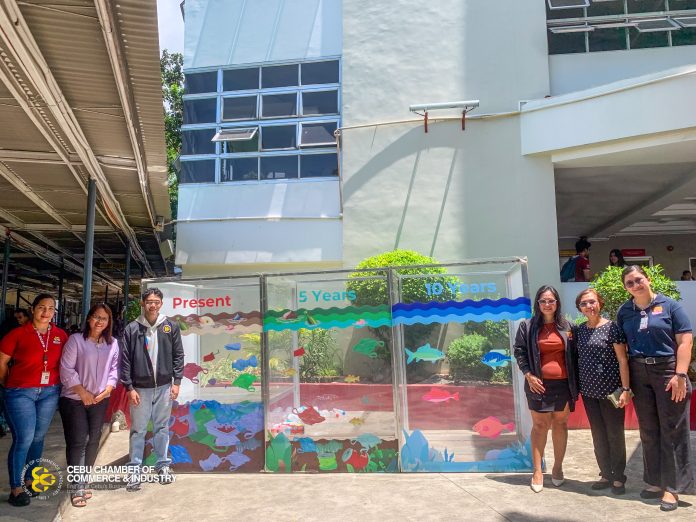
The Cebu Chamber of Commerce and Industry (CCCI) has expanded its Flood Hero initiative to Cebu Institute of Technology-University, stepping up efforts to improve plastic waste management and strengthen flood resilience in Cebu.

The chamber said it had installed a PET bottle receptacle bin at CIT-U under its Flood Hero Cebu Movement, part of a broader campaign to promote waste segregation and responsible plastic disposal in partnership with schools and universities.

The receptacle is meant to encourage students, faculty and staff to segregate and recycle PET bottles, a common form of plastic waste that often ends up blocking drainage systems and worsening urban flooding.

CCCI said the school-based program builds on earlier installations at the University of the Visayas, Cebu Technological Sciences-Cebu, and the University of San Jose-Recoletos, where nearly 100 kilograms of PET bottles have already been collected.

The business group said the initiative would continue to rotate among schools across Cebu as part of a wider push to foster shared responsibility among young people and local communities.

Recovered PET bottles are repurposed into environmental interceptors in partnership with the Cebu City Environment and Natural Resources Office, CCCI said.

These interceptors are installed in rivers and waterways to trap floating plastic waste before it reaches the sea, while also helping keep waterways clear to reduce flood risks.

The initiative is part of a broader goal of positioning Cebu as the first city with zero contribution to ocean plastic, the chamber said.

CCCI said involving academic institutions was key to building long-term environmental awareness and practical action, adding that schools could play a central role in shaping more environmentally responsible citizens.

The program brings together the private sector, government, schools and communities in an effort to turn everyday waste into flood mitigation and anti-pollution measures, as Cebu grapples with recurring flooding and marine plastic pollution.

Cebu Business News

Aboitiz InfraCapital adds Cebu desalination facility to water portfolio

0

Aboitiz InfraCapital said it has expanded its water business with the inauguration of a desalination facility in Lapu-Lapu City, Cebu, as the Philippine infrastructure group moves to strengthen water supply in a fast-growing urban and industrial hub.

The MEZ2 desalination facility, located in Mactan Economic Zone 2, has a rated capacity of 5 million liters per day and treats brackish lagoon water into potable supply using reverse osmosis and advanced filtration systems, the company said.

The project adds desalination to Aboitiz InfraCapital Water’s portfolio, which now totals about 320 million liters per day.

The facility supplies water to 42 locators and about 12,000 employees in the estate, while also supporting Mactan-Cebu International Airport, which handled 12 million passengers in 2025, according to the company.

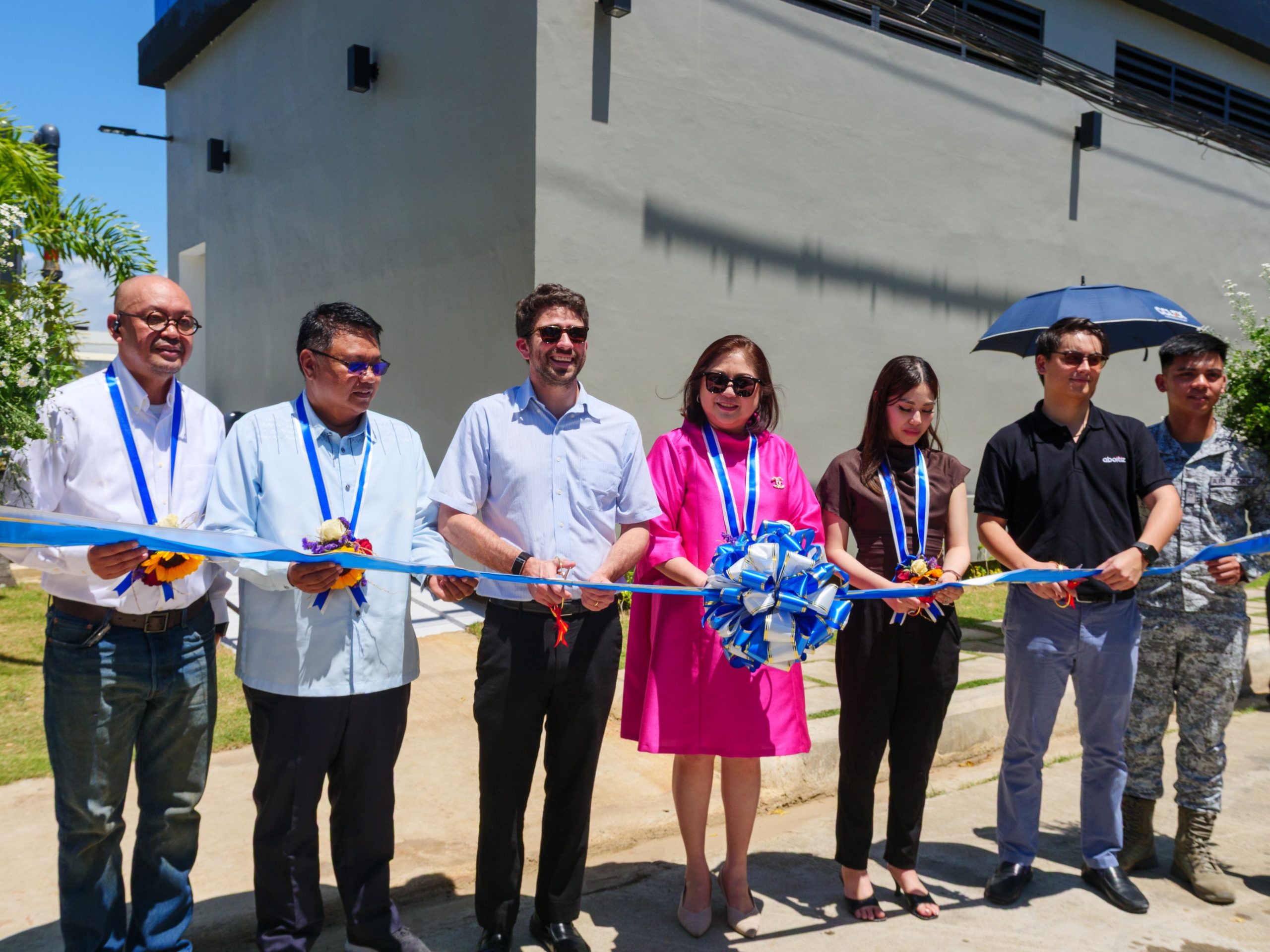
(FROM L-R): MEZ2 Zone Manager Atty. Rufino San Juan IV, MEZ1 Zone Manager Arnel Suyu, AIC Vice President and
Head of Water Eduardo “Dudes” Aboitiz, Lapu-Lapu City Mayor Maria Cynthia “Cindi” King-Chan, Councilor Jasmine
“Daday” Chan, AIC Water Assistant Vice President and Head of Growth and Strategy Ramon “Shake” Aboitiz
Tuason, and Lt. Kyle Mabbayad of the 560th Air Base Group took part in the ribbon cutting ceremony to inaugurate
Aboitiz InfraCapital Water’s MEZ2 Desalination Facility in MEZ2 Estate, Lapu-Lapu City last March 19, 2026.

“As Lapu-Lapu City continues to rapidly develop, water security becomes even more critical,” Eduardo “Dudes” Aboitiz, vice president and head of water at Aboitiz InfraCapital, said in a statement. “We must be proactive in our approach and utilize all available water sources to deliver reliable and safe water supply to where it is needed.”

The plant began operating in June 2025, ahead of its formal inauguration on March 19, 2026. Aboitiz InfraCapital said the facility helped meet emergency water needs during Typhoon Tino and the 2025 Cebu earthquake, delivering more than 500,000 liters of potable water to Cebu province and surrounding areas.

Lapu-Lapu City Mayor Maria Cynthia “Cindi” King-Chan welcomed the investment, saying it would help strengthen the city’s water resilience.

“We commend Aboitiz InfraCapital Water for this forward-thinking investment, transforming brackish water into potable water that now serves both the MEZ2 Estate and the Mactan-Cebu International Airport,” Chan said. “This is innovation that truly makes a difference.”

Aboitiz InfraCapital is the infrastructure arm of the Aboitiz Group, with investments spanning airports, water and wastewater, and digital infrastructure. Its water business includes bulk and industrial water assets across the Philippines.

Cebu Business News

Cebu’s Vivant posts 21% rise in 2025 core profit on power, water gains

0
Vivant Corporation

Cebu-based Vivant Corp. said its core net income rose 21% in 2025 to P2.7 billion, driven mainly by stronger earnings from its power generation business and a turnaround in its water unit, as the listed utility and infrastructure firm expands its energy and water footprint in the Visayas and beyond.

Net income attributable to equity holders of the parent also reached P2.7 billion, up 15% from 2024, after accounting for non-core items that included a gain from a share purchase transaction and losses linked to an unplanned plant outage.

“Vivant Corporation recorded a double-digit expansion in earnings in 2025 with our CCNI reaching Php 2.7 bn, 21% higher than the prior year,” Chief Executive Officer Arlo G. Sarmiento said in the company’s results statement.

He said the performance was driven by the strong showing of Vivant Energy’s generation assets, particularly its oil plants, as well as steady contribution from the electricity distribution business.

Vivant Corporation
Vivant Corporation Chief Executive Officer Arlo G. Sarmiento

Vivant Energy contributed P3.4 billion to total net income, with power generation accounting for P2.5 billion, or the bulk of segment earnings. The company said this was supported by gains from the reserve market, where nominations across four conventional plants jumped more than 1.7 times to 1,647 gigawatt-hours, generating combined revenues of P2.5 billion.

Its 35%-owned distribution utility Visayan Electric Co., which serves the Cebu area, contributed P1.1 billion, down 13% from a year earlier. Vivant said growth in electricity volumes was offset by an Energy Regulatory Commission-mandated one-time refund for unutilized regulatory costs and a one-time loss related to Typhoon Tinio. VECO’s sales volume still rose 3% to 4,033 GWh in 2025.

The water business posted a P218-million income contribution, reversing a P9-million loss in 2024. Vivant said this was helped by finance income recognized from its concession asset tied to a 25-year joint venture agreement signed in April 2025 between Vivant Hydrocore Holdings and the Metropolitan Cebu Water District to supply Metro Cebu with potable water from the 20-million-liter-per-day seawater desalination plant of Isla Mactan Cordova Corp.

Sarmiento said Vivant Water is “slowly pivoting from an investment-heavy phase to a revenue-generating one, as it starts to recognize the value of our concessions.”

Vivant also pointed to expansion projects across the Visayas. In November 2025, its unit won the notice of award for a 17.5-megawatt solar project in Bohol under the government’s Green Energy Auction Program, while another wholly owned subsidiary signed a 15-year power supply agreement with the Province of Siquijor Electric Cooperative for 11 MW of capacity, with delivery set to begin in the second half of 2026.

Looking ahead, Sarmiento said the company remains focused on its 2030 targets through four priorities: expanding its retail energy footprint, strengthening its small power utilities business, scaling renewable generation capacity, and providing essential water services in areas where it operates.

Cebu Business News

Jollibee launches inaugural National Day of Joy across Philippines

0
Jollibee
Jollibee National Day of Joy

Jollibee Foods Corp’s flagship fast-food brand marked its first National Day of Joy on March 20 with outreach activities, a mall event in Makati and online promotions aimed at encouraging Filipinos to share small acts of happiness.

The celebration coincided with the International Day of Happiness, which Jollibee said reflected the brand’s long-standing focus on family meals, birthdays and everyday moments of togetherness.

“Jollibee has always been about serving great-tasting food and sharing the joy of eating with everyone,” Dorothy Ching, vice president for marketing of Jollibee Philippines, said in a statement. She said the campaign was meant to highlight simple moments that can brighten someone’s day.

The main event was held at One Ayala in Makati, where the Jollibee mascot greeted families and visitors and complimentary Crunchy Chicken Sandwiches were distributed. Guests posed for photos and joined interactive activities at the venue.

Outside Metro Manila, the company held community visits at orphanages and elderly care facilities across the country. These included Missionaries of the Poor in Manila, Little Angels Home Inc. in South Luzon, Children’s Home of Eucharistic Love and Kindness in North Luzon, Ramon Durano Foundation Home for the Aged in the Visayas, and Davao Veil Geriatric Home Care in Mindanao.

Jollibee also extended the campaign online, with social media users posting family celebrations, selfies and other “joyful moments” on Facebook. A related campaign on X encouraged fans and the public to share stories and videos, while the company ran a delivery promotion offering free delivery for orders above 500 pesos through its app or website, or a free Peach Mango Pie for orders above 300 pesos.

The campaign underscored Jollibee’s effort to strengthen its emotional connection with customers through community-based and digital engagement.

Cebu Business News

Guadalupe Elementary School gets first school traffic light

0
Cebu City Mayor Nestor Archival Jr and Guadalupe Elementary School Alumni Association (GESAA) president Lorna Ubod led the official opening of the traffic light. Photo: GES The VantagePoint - Ang Alampat

Guadalupe Elementary School has inaugurated a pedestrian traffic light outside its campus, becoming the first school in the city with a dedicated traffic signal aimed at improving student safety.

The project, formally launched through a grand inauguration and switch-on ceremony, was carried out through a partnership between the Guadalupe Elementary School Alumni Association and the Cebu City government, the school said.

Cebu City Mayor Nestor Archival said the city would support projects that help protect schoolchildren. “Any project of the school, I will support as long as it is for the safety of the children,” he said in Cebuano.

Traffic officials said the installation marked the first time a school in Cebu City had been provided with its own traffic light. Raquel Arce, head of the Cebu City Traffic Office, said Guadalupe Elementary School was fortunate to be the first school in the city to receive such a facility.

Photo: GES The VantagePoint – Ang Alampat

The initiative was led by the Guadalupe Elementary School Alumni Association under its president, Lorna Labra Ubod, in coordination with city authorities. Also present during the ceremony were Arce and lawyer Kent Francisco C. Gungoy.

Ubod said the traffic light had long been a dream for the school community amid years of change and improvement in the campus.

The school said the project reflected cooperation between alumni and local officials and was intended to strengthen road safety for students and pedestrians in the area.

Cebu Business News

Cebu group urges small-scale solar shift as power rates seen rising

0
Photo by Zbynek Burivl on Unsplash.

A Cebu-based consumer advocacy group has urged households and small businesses to adopt low-cost solar devices to cushion the impact of rising power bills, warning that summer demand and higher global fuel prices could push electricity rates sharply higher in the coming months.

The Cebu Electricity Rights Advocates (CERA) said on Monday that hotter weather, which is driving heavier use of cooling appliances, and geopolitical tensions in the Middle East were creating pressure on fuel prices that could feed through to Philippine power costs.

“We are facing a period of unprecedented volatility,” CERA convenor Nathaniel Chua said in a statement, adding that higher electricity use during the dry season and rising global fuel costs were directly affecting household power bills.

The group called the shift to small-scale solar a “solar micro-shift,” urging residents, street vendors and sari-sari store owners to use standalone solar kits and solar-powered fans to trim dependence on the grid during peak hours.

CERA said a 20-watt solar lighting kit costing about 450 pesos to 650 pesos ($7.90-$11.40) could provide up to 8 to 10 hours of lighting after a day of charging, while solar-powered DC fans priced at around 1,499 pesos to 2,499 pesos could run for up to 10 hours without adding to monthly electricity bills.

“For micro-entrepreneurs, this is a practical and immediate defence against rising bills,” Chua said. “Solar is not meant to replace the grid but it can significantly reduce daily expenses and provide reliable lighting during brownouts.”

The group said wider use of solar lighting and fans could help cut peak demand, particularly at night when utilities may have to source more expensive power from the Wholesale Electricity Spot Market. It said this could help consumers avoid bill increases of 15% to 20% during periods of high demand, while also easing strain on the grid.

Still, CERA said small-scale solar was only a short-term response and that Cebu needed additional baseload capacity to secure long-term supply and price stability.

“Baseload power is the backbone of a stable energy system,” Chua said. “Solar is first aid but Cebu urgently needs the surgery of new baseload power plants to ensure long-term reliability and price stability.”

The group said electricity demand in Cebu was growing by about 150 megawatts a year, leaving the province increasingly exposed to supply disruptions as it continued to rely on imported power.

CERA also warned that rising fuel prices tied to the conflict involving Iran could further lift electricity rates in the Philippines, where much of power generation still relies on coal, natural gas and oil.

It called on the Department of Energy and the Energy Regulatory Commission to accelerate new baseload projects, explore temporary relief measures such as staggered billing, review non-essential charges and support efforts to remove value-added tax from electricity bills.

“The next billing cycles could be among the highest we have ever seen,” Chua said. “We urge every Cebuano to act now, conserve energy, consider small solar investments, and prepare for continued volatility in the months ahead.”

Cebu Business News

Abellana National School Batch ’76 General Curriculum Holds Oathtaking of New Officers

0
ANS76ers

Abellana National School Batch ’76 General Curriculum, known as the “76ers,” has inducted its new set of officers during an oathtaking ceremony held on March 6, 2026 at Quest Hotel.

The induction was led by Roy Melgo, president of the Abellana National School Alumni Foundation Inc. (ANSAFI), who called on the newly elected officers to continue fostering camaraderie and rapport among batch members while upholding the spirit of being Abellana National School alumni.

Roy Melgo, ANSAFI PRESIDENT, inducted the new set of officers of ANS76ers.

The new officers of ANS Batch ’76 are led by President Macky Cabiluna. Also elected were Atty. Eva Cabrera as vice president for internal affairs, with Ethel Canizares as assistant vice president for internal affairs; Cynthia Sanchez as vice president for external affairs, with Joseph Quijada as assistant vice president for external affairs; Josephine Torino as secretary, with Lilith Catacutan as assistant secretary; Alice Labrado as treasurer, with Elsa Vergara as assistant treasurer; Ma. Eyesa Lumanas as auditor, with Libeth Branzuela, assistant auditor, and Hope Siladjan as editor.

Serving as public relations officers are Sara Eloisa Garcia, Becky H. Yasi, Edmund Mirasol, Jaime Manapat, Jose Gutierrez Jr., Laurel Almerante, and Chad Cervantes. Engr. Daisy Toledo was named adviser.

The ceremony marked a new chapter for the batch as it seeks to strengthen ties among its members and sustain its involvement in alumni activities.

Cebu Business News

Rising fuel costs drive Cebu trucking firms to seek 30% rate increase

0
Leslie D. Lim, LDL Group’s chief executive officer. Photo from Cebu Provincial Government.

Cebu-based logistics and transport operators are seeking to raise trucking and transport fees by as much as 30% as surging fuel prices squeeze margins, according to Leslie D. Lim, chief executive officer of LDL Group of Companies, which operates logistics and transport businesses.

Lim said transport firms were asking customers to allow an increase of around 30% in trucking charges at a time when average fuel prices were hovering at about P100 per liter. Based on prevailing trucking rates in Cebu of around P9,000 to P10,000 per trip, that would translate to an added P2,700 to P3,000, she said.

“We ask our customers to allow us to increase 30% on trucking, transport fees at the current P100/liter average fuel price,” Lim said, noting that rates could rise further if pump prices continue to climb.

Lim said the impact of higher fuel costs is disproportionately felt by transport operators compared to manufacturers, where fuel represents only a small portion of overall expenses.

“It doesn’t affect too much the manufacturing sector because fuel is a small percentage of their operation. But for us transport companies, fuel is vital,” she said.

Lim, who is also part of the Customs Industry Consultative and Advisory Council (CICAC), said a similar increase in transport charges had been implemented during Typhoon Odette, when Cebu experienced fuel shortages and widespread power outages.

The push for higher trucking fees comes as the Philippines faces renewed fuel price volatility driven by geopolitical tensions in the Middle East, which have pushed global oil prices higher and triggered successive pump price increases in recent weeks.

The Department of Energy has warned of continued price swings, while lawmakers have moved to give the president authority to suspend fuel taxes to cushion the impact on consumers and businesses.

For logistics firms, Lim said, rising fuel prices are an immediate operational challenge that leaves little room but to pass on costs to customers in order to sustain operations.

Cebu Business News

Prince Warehouse partners with Vivant’s COREnergy to optimize energy use

0

Cebu-based retailer Prince Warehouse Inc. has tapped Vivant Energy’s retail electricity supplier arm, COREnergy, to help power its operations more efficiently as businesses gain wider access to alternative power providers under the country’s open-access electricity regime.

Prince Warehouse, which has grown from Cebu into a nationwide retail chain, said the partnership is aimed at improving energy efficiency, supporting store productivity and helping manage long-term operating costs.

“To remain relevant and responsive to our customers, we continue to rethink how we operate. Energy plays a critical role in keeping our stores efficient and resilient,” Blake Nelson Go, vice president for business development and finance at Prince Warehouse, said in a statement.

He said partnering with COREnergy would allow the company to make more informed energy decisions that support growth while maintaining reliable service for customers.

The deal comes as more commercial and industrial power users become eligible to choose their electricity supplier following policy changes that lowered the threshold for joining the Retail Competition and Open Access (RCOA) framework to 100 kilowatts peak demand.

Under the setup, qualified businesses may source power from licensed retail electricity suppliers instead of relying solely on their traditional distribution utility.

Vivant Energy said COREnergy helps businesses manage power requirements more strategically, including supply optimization and the integration of sustainability goals into long-term planning.

The company said its partnership with Prince Warehouse reflects growing interest among businesses in using energy procurement as a tool to improve profitability, productivity and operational resilience amid a more competitive electricity market.

Cebu Business News

Cebu advocacy group warns of ‘hidden water tax’ as households turn to costly private supply

0
Photo by Luis Tosta on Unsplash.

Thousands of households in Cebu are effectively paying a “hidden water tax” as unreliable piped supply forces them to buy water from delivery trucks and refilling stations at far higher prices, an advocacy group said on Monday.

Cebu Energy Rights Advocates (CERA) said some families are paying as much as 400 pesos per cubic meter for trucked water, or more than 10 times the standard rate for piped supply.

Water bought from refilling stations can cost as much as 1,000 pesos per cubic meter, it added.

The group said limited or inconsistent service from the Metro Cebu Water District (MCWD) in several areas has pushed residents and small businesses to depend on more expensive alternative sources just to meet daily needs.

“When water does not reach the tap, families are forced to buy it elsewhere, and they end up paying much more,” CERA convenor Nathaniel Chua said in a statement. “Instead of a predictable, regulated monthly bill, residents are forced to juggle a chaotic mix of water trucks and refilling stations just to get through the week.”

CERA said the burden falls most heavily on lower-income households, many of which cannot afford large storage tanks or private wells and are forced to buy water in smaller amounts on a daily basis, often at higher per-unit costs.

The group said the issue is worsening inequality in urban communities and should not be viewed simply as a pricing issue, but as a broader supply failure.

“This is not just a logistical problem. It is a driver of urban poverty,” CERA said. “The most affordable water is reliable tap water. When the system fails, the market price for survival becomes a luxury.”

CERA called for greater transparency and faster infrastructure development to address Metro Cebu’s worsening water shortage.

It also urged MCWD to accelerate projects aimed at expanding supply, warning that the region’s continued dependence on groundwater is no longer sustainable.

The group said access to water should be treated as a public necessity rather than a costly commodity.

Cebu Business News

dotTV launches digital-first media network with DYCM radio partnership

0
DOTTV DYCM
Cebu Provincial Board Member Celestino Martinez and dotTV CEO Niño Padilla during the launch of DotTV Network and DYCM dotTV AM–FM Radio

dotTV Network and DYCM dotTV AM-FM Radio officially launched with a hybrid broadcast model that will allow audiences to access its programs both on traditional radio and online, as the new media venture looks to widen its reach across different audience segments.

The launch marks a partnership between DYCM and dotTV, combining radio broadcasting with digital streaming at a time when media consumption is increasingly shifting to online platforms.

“This is a partnership between DYCM and dotTV. This is a win-win,” Board Member Celestino Martinez said at the launch. He said audiences with internet access would be able to watch programs through dotTV, while those without reliable connectivity could continue to listen via radio.

Martinez said the platform aimed to deliver news, information and entertainment programs tailored to a broad listenership, adding that the network hoped to strengthen its offerings over time and cater to different audience groups.

dotTV Chairman and Chief Executive Niño Padilla, an award-winning broadcast journalist, said the network wanted to contribute to what he described as national healing amid political divisions, corruption and other social issues.

“I am a dreamer. I dream for this. I need believers who will trust me to make this into reality,” Padilla said, as he urged media practitioners joining the network to use their platforms responsibly and help promote positive change.

Padilla said dotTV was assembling a team of veteran journalists, editors and broadcasters as it builds out its newsroom and programming lineup.

DotTV is positioning itself as a digital-first media outlet as more audiences turn to online channels for news and discussion, while retaining a radio presence to reach communities with limited internet access.

Padilla has held several roles in Philippine broadcasting, including management positions at Cebu-based radio station DYRC and work as a program handler at DZRH. He also previously served as a Malacañang appointee under the Presidential Communications Office.

The launch underscores how local media groups are adopting hybrid broadcast strategies to remain relevant in a fast-changing media landscape, where digital platforms are reshaping how audiences consume news and public affairs content.

Cebu Business News

Vivant Unit Raises Stake in Puerto Princesa Wastewater Plant Operator to 90%

0
Puerto Princesa Water Reclamation and Learning Center, Inc. (PPWRLC), a 2MLD wastewater plant serving as the water systems enhancement infrastructure of Puerto Princesa, Palawan.

Vivant Corp’s water unit has lifted its stake in the operator of Puerto Princesa’s sole wastewater and septage treatment facility to 90% after acquiring an additional 45% equity interest, extending the listed Cebu-based group’s push into water and sanitation projects beyond Metro Cebu.

Vivant Hydrocore Holdings Inc (VHHI), under Vivant Infracore Holdings Inc which operates as “Vivant Water,” increased its ownership in Faith Lived Out Visions 2 Ventures Holdings Inc (FLOWs) to 90%, the company said in a Philippine Stock Exchange disclosure.

FLOWs is the private-sector partner of the Puerto Princesa city government in Puerto Princesa Wastewater Reclamation and Learning Center Inc (PPWRLC), the city’s sole wastewater and septage treatment facility. Vivant said the transaction aligns with an operational and management transition at the plant under the new set-up, as it applies its governance standards and operating processes.

PPWRLC, located along Puerto Princesa Bay, has a contracted capacity of 2 million liters per day (MLD) of wastewater treatment and 70 cubic meters per day (CMD) of septage treatment, serving households and businesses in the city. The plant began operations in January 2022, Vivant said.

In its disclosure, Vivant cited a 2025 wastewater treatment efficacy study by University of the Philippines Diliman units, which it said found effluent samples showing up to a 99% reduction in coliform levels. Vivant also said the facility has supported broader bay rehabilitation efforts, including the return of marine species such as dugong and the staging of international triathlons.

“Wastewater management is just as important as water supply in protecting the environment and meeting future needs,” Vivant Water president Jess Garcia said, framing wastewater treatment as part of a “circular system” that recovers resources and protects ecosystems.

Vivant Corp (PSE: VVT), a holding firm with investments across power generation, distribution and retail electricity, has been building out a water platform spanning bulk water supply, wastewater, and potential distribution. In Metro Cebu, Vivant has said its Isla Mactan Cordova Corp project is poised to be the Philippines’ first utility-scale seawater desalination plant, with commercial operations targeted in 2026.

Cebu Business News